Ezra Olubi · Paystack co-founder

PAYSTACK BEGAN
WITH A FRIENDSHIP

18 lessons from Ezra Olubi on curiosity, trusted relationships, management mistakes and the culture that helps a shared construction hold.

Observe
Question
Act
Recover
18 lessons35 min conversation
Watch the original interview
PAYSTACK BEGAN WITH A FRIENDSHIP: 18 lessons from Ezra Olubi on curiosity, trusted relationships, management mistakes and the culture that helps a shared construction hold.

Before the lessons

Who is speaking. Where the conversation comes from.

A quick orientation to the person, the publisher, and the context before entering the recap.

The person

Nigerian software engineer and entrepreneur

Ezra Olubi

Paystack co-founder and former chief technology officer

Ezra Olubi is a Nigerian software engineer and entrepreneur. He co-founded Paystack with his former university classmate Shola Akinlade in 2015 after years of shared projects and experience with online payments. Y Combinator states that he led Paystack’s technology function from 2015 to 2025. The interview summarized by Ooléle was recorded in 2020, when he was still the company’s chief technology officer.

Nigerian entrepreneurship · African payments · Software engineering

1 associated recap

Paystack co-founder and former chief technology officer

Ezra Olubi is a Nigerian software engineer and entrepreneur. He co-founded Paystack with his former university classmate Shola Akinlade in 2015 after years of shared projects and experience with online payments. Y Combinator states that he led Paystack’s technology function from 2015 to 2025. The interview summarized by Ooléle was recorded in 2020, when he was still the company’s chief technology officer.

View the full profile


The source

Interview media platform and community

Founders Connect

Founders Connect is a media platform created by Peace Itimi to document the journeys of African and Black founders, operators and innovators around the world. It began with extended YouTube interviews and expanded into documentaries, public events and a community connecting the technology ecosystem with the people building it.

African startups · Founder journeys · Technology

Interview media platform and community

Founders Connect is a media platform created by Peace Itimi to document the journeys of African and Black founders, operators and innovators around the world. It began with extended YouTube interviews and expanded into documentaries, public events and a community connecting the technology ecosystem with the people building it.

Explore this source

FOREWORD

Ezra Olubi is a Nigerian software engineer who co-founded Paystack with Shola Akinlade. This Founders Connect conversation was published on November 28, 2020, a few weeks after Stripe acquired Paystack. Ezra was still speaking as the company’s chief technology officer. His operating role at Paystack ended in 2025, so this recap presents his testimony and position at the specific time of the interview.

The value of this story is not an abstract celebration of technology or an acquisition. It lies in the relationships that came before the company: a first encounter with a computer, a university friendship tested through work, close observation of real behavior, a management mistake examined honestly, and an identity that refuses to be reduced by labels.

Every displayed quotation remains in the source language and is mechanically checked against its timestamped excerpt. The evidence badge opens the original passage and a direct link to the corresponding moment in the video.

CHAPITRE 1

A VOICE TAKES SHAPE

The journey begins before Paystack. Ezra connects his way of thinking to ordinary encounters, technical curiosity, and the decision to question what his surroundings presented as obvious.

These opening lessons show how an inner disposition becomes visible in relationships and prepares a distinctive way of building long before the title of co-founder arrives.

01

MAKE CANDOR PREDICTABLE

Ezra does not frame honesty as a dramatic reveal reserved for difficult moments. He describes an everyday posture: remaining open to questions and answering directly. That consistency lowers uncertainty in a relationship because other people do not have to guess which version of the truth they will receive. Trust grows when candor becomes predictable, including when the answer is uncomfortable. This does not mean sharing everything with everyone or abandoning tact. It means distinguishing the legitimate protection of information from the temptation to evade. Before an important conversation, clarify what you know, what you do not know, and what you are genuinely prepared to stand behind.

Ezra Olubi
you can like ask me anything. Um, and
you can be sure
MAKE CANDOR PREDICTABLE
I'll give you like the honest straight answer.
02

LET AN ENCOUNTER OPEN A PATH

Ezra’s first contact with a computer did not come from a career plan or an institution. A family friend moved into their home to be closer to school and brought his machine with him. That ordinary presence opened a path toward programming in secondary school. An encounter can become decisive when curiosity is allowed to produce a first action. The lesson is not to wait passively for luck, but to make exploration possible around us. Sharing a tool, demonstrating a practice, or inviting someone to try can widen their horizon. We cannot always control the initial spark, but we can create conditions that help it continue.

Ezra Olubi
he came in with his computer and that was like
my first introduction
LET AN ENCOUNTER OPEN A PATH
to computers and then that was how I got into u programming um in secondary school.
03

QUESTION THE CONTEXT YOU INHERIT

Looking back at his religious upbringing, Ezra notices how deeply birthplace and family shape what each person considers obvious. That realization does not require replacing one certainty with another. It invites him to examine where his convictions came from. Understanding inherited context creates useful distance between what we believe and what we have actually questioned. That distance can encourage humility without dismissing faith or family history. When you hold a strong conviction, ask which experiences formed it, how another person might reasonably have reached a different conclusion, and which part still deserves examination. The purpose is not permanent doubt. It is a more conscious relationship with belief.

QUESTION THE CONTEXT YOU INHERIT
Ezra Olubi
And if I was born into a Muslim home, probably
I'll probably feel
the opposite way.
04

WORK TOGETHER BEFORE PARTNERING

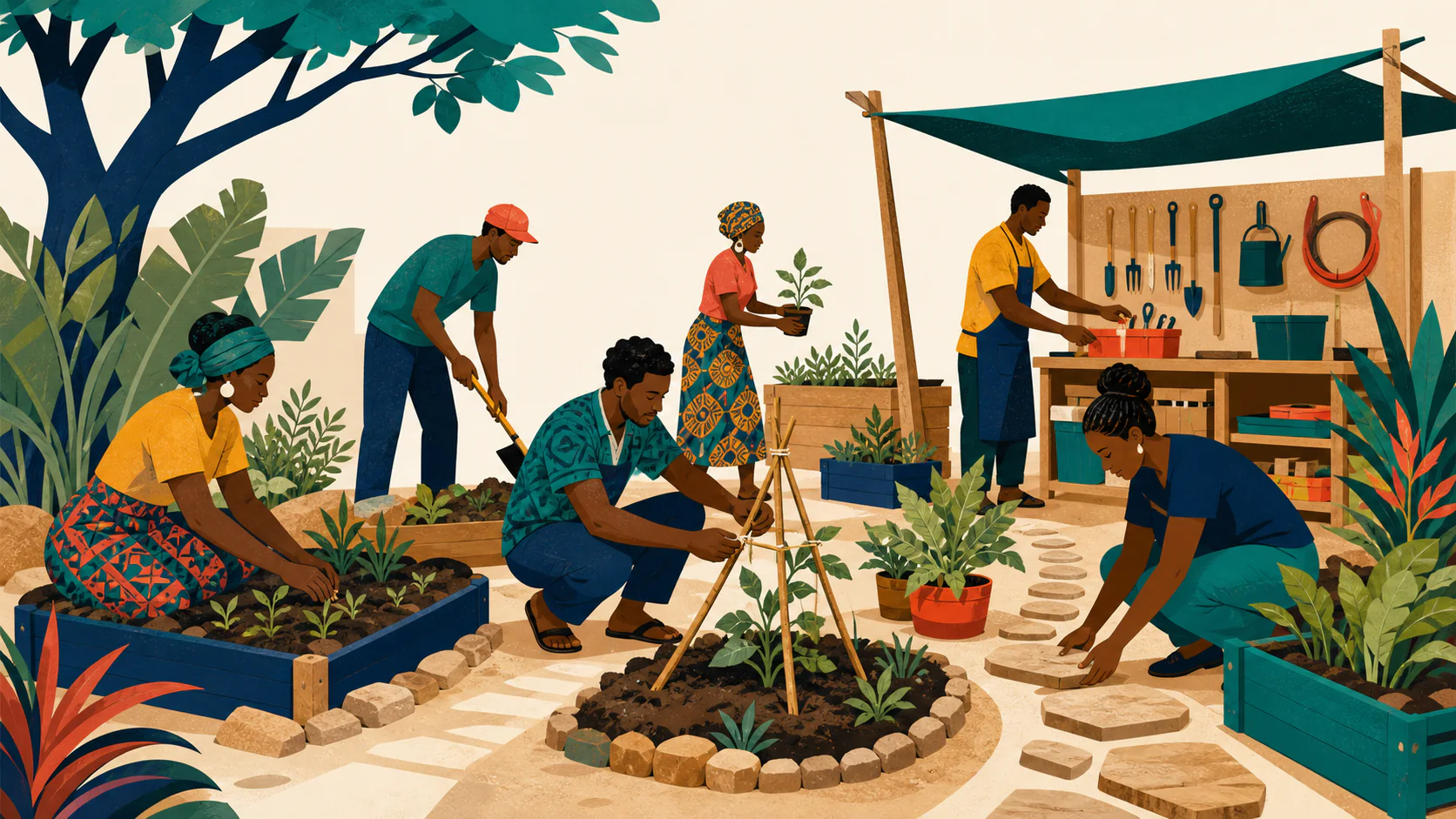
Ezra and Shola did not discover their compatibility when they founded Paystack. They became friends at university, collaborated on projects, and later worked together as freelancers. This gave them opportunities to observe each other’s methods, reliability, and approach to problems before sharing a company. Trust between partners becomes stronger when it rests on experienced work, not only a shared vision. Previous collaboration cannot guarantee success, but it reveals behaviors that abstract conversations often hide. Before formalizing an important partnership, complete a limited project together. Watch how each person communicates, follows through, responds to pressure, and repairs a mistake. A small shared commitment can expose more than an ambitious pitch.

Ezra Olubi
then we became friends. Um and then in our final year we actually like
collaborated
WORK TOGETHER BEFORE PARTNERING
on the projects we exhibited.

CHAPITRE 2

FROM THE FIELD TO PAYSTACK

The payments problem did not arrive as an isolated idea. It became clearer through unexpected behavior, earlier attempts, and a conviction visible enough to attract the right collaboration.

Technology remains a means. The heart of the construction lies in attention to behavior, customers, and blind spots that two partners can see more clearly together.

05

NOTICE THE USE YOU DID NOT PLAN

The digital wallet was designed to help people buy mobile airtime. Yet some users began keeping money inside it as a store of value. Rather than treating that behavior as an anomaly, the team saw a broader need: letting people use that value elsewhere. Unexpected use can reveal the real problem more clearly than the designer’s original intention. It is not enough to count clicks or collect explicit requests. Teams must also notice detours, repeated behaviors, and improvised solutions. Before adding a feature, identify what people already do despite the product’s limitations and ask why that behavior persists. The answer may point toward a more meaningful opportunity.

Ezra Olubi
a lot of people started making use of this wallet to like as a
store of value
NOTICE THE USE YOU DID NOT PLAN
and that made us realize that we could open this up
06

MAKE CONVICTION VISIBLE

When Shola approached Ezra, Ezra’s interest in payments was not a preference invented for the opportunity. He had already explored the field and shared an online payment business plan with him. His conviction was visible before a concrete proposal appeared. An intention becomes credible when it leaves traces that other people can recognize. This is not an invitation to promote yourself constantly. It means turning sustained curiosity into research, documents, prototypes, or precise conversations. Those traces help the right people understand what you may be ready to build. If a subject genuinely matters to you, produce one modest piece of evidence and share it with someone capable of challenging it.

Ezra Olubi
I think this was in 2013. Uh so
he already knew
MAKE CONVICTION VISIBLE
that, oh, Ezra actually likes payments.
07

CROSS-CHECK BLIND SPOTS

The complementarity between Ezra and Shola is not limited to a simple division between technology and relationships. Both help maintain the culture and can point out what the other person does not see. Ezra also describes developing his own understanding of people and behavior. A strong partnership does not freeze roles; it creates mutual vigilance around blind spots. That dynamic requires enough trust to receive an observation without treating it as rivalry. It also asks each person to keep widening their abilities. In an important collaboration, define primary responsibilities, then create a regular moment when each partner can identify a risk, a human need, or a tension the other may have missed.

CROSS-CHECK BLIND SPOTS
Ezra Olubi
there are things he sees and shares with me. There are like things that
he might be blindsided
by and I see and then I bring up with him as well.
08

KEEP TECHNOLOGY IN HUMAN SERVICE

Ezra acknowledges the central role of engineers, but he does not reduce Paystack to the people writing code. A customer-oriented company must also invest in operations and teams that support its users. Technology fulfills its promise only when people can understand it, trust it, and receive help. Human service is not a layer added after the product. It is part of the real experience, especially when the product handles money and reliability matters. To understand an organization, do not look only at what it automates. Look at who listens to difficulties, resolves exceptions, and carries the relationship when the system is not enough. Those roles reveal what the company truly values.

Ezra Olubi
the quest to like be very um
customer oriented
KEEP TECHNOLOGY IN HUMAN SERVICE
and all of that has also made us invest a lot in like uh our user operations

CHAPITRE 3

LEAD WITHOUT CONFUSING ROLES

Growth forces the team to name what it does not know, distinguish engineering from management, and recognize the work hidden behind visible outcomes.

Capital and culture then become governance choices. Their value lies not in prestige, but in the capacity they preserve for people and the mission.

09

ACKNOWLEDGE WHAT YOU DO NOT HAVE

In the early days, Ezra and his team did not pretend to possess every advanced capability in house. They identified work beyond their current depth, then relied on existing services instead of turning every gap into an improvised internal project. Acknowledging a missing skill is a construction decision, not an admission of weakness. That honesty protects attention, limits avoidable mistakes, and lets a small team focus on work it can understand and own well. The human principle is simple: name what you do not know, choose support deliberately, and remain accountable for the outcome. Outside help does not replace judgment. It creates a more realistic boundary for judgment, learning, and responsibility while the team develops the knowledge it genuinely needs.

Ezra Olubi
We also acknowledge the fact that um
we didn't have
ACKNOWLEDGE WHAT YOU DO NOT HAVE
the necessary how would I put it advanced skill sets in house
10

SEPARATE EXPERTISE FROM MANAGEMENT

Paystack placed its strongest engineers in management roles, then discovered that technical excellence did not guarantee attentive leadership. The promoted people became frustrated, their reports were poorly supported, and the organization lost momentum. A promotion should not reward one skill by imposing a different profession. Management requires listening to needs, understanding aspirations, addressing tension, and helping other people grow. Before moving someone into that role, test their desire for it, their relational abilities, and the support they will receive. A healthy organization can create two respected paths: deeper individual expertise and responsibility for collective work. Neither path should be treated as secondary. The best engineer may remain most valuable when allowed to keep practicing the craft they chose.

Ezra Olubi
just because you are
a stellar engineer
SEPARATE EXPERTISE FROM MANAGEMENT
doesn't mean you can understand uh people
11

SEE THE WORK THAT STAYS INVISIBLE

Ezra remembered the first fundraising process as relatively smooth. He also recognized that this perception reflected how the work was divided: his co-founder was closer to the investor conversations and carried much of the legwork. A result that looks easy can conceal the relational labor absorbed by someone else. Before telling a collective success story, ask who prepared the conversations, followed up, handled rejection, and maintained trust. That attention does not diminish the achievement. It makes the account fairer and more useful. Within a team, make invisible work discussable, share credit for it, and prevent the person carrying it from becoming invisible too. A complete story includes both the visible outcome and the effort that allowed others to experience it as effortless.

SEE THE WORK THAT STAYS INVISIBLE
Ezra Olubi
because my co-founder was like
more in the weeds
of like having all the investor conversations
12

FUND A STRATEGY, NOT A SCORE

Ezra describes financial restraint as a governance choice. Paystack was not pursuing the largest possible round simply to display the number. The team valued its autonomy and wanted to avoid bringing in voices that could redirect its decisions. Good capital is measured not only by its size, but by what it enables without distorting the mission. Before accepting funding, clarify the actual need, the strategic value of the investor, and the rights being exchanged. More money may accelerate an ambition, but it can also alter power and expectations. The announced amount is therefore not the final measure of success. The better question is whether the capital strengthens the work while preserving the organization’s ability to decide with consistency and purpose.

Ezra Olubi
not necessarily chasing
the big ticket numbers
FUND A STRATEGY, NOT A SCORE
for the sake of it.
13

BUILD CULTURE FROM THE BEGINNING

When Ezra considers what he would repeat, he returns to the people Paystack selected and the environment created around them. Culture is not presented as a statement mounted on a wall. It emerges through who joins, which behaviors receive support, and the conditions people encounter while doing their work. Culture begins in ordinary decisions made before an organization becomes large. A small team can examine early what it rewards, what it tolerates, and how it handles disagreement. Waiting for growth makes embedded habits harder to change. Choose a few concrete principles, translate them into visible practices, and review whether the environment truly lets people contribute without protecting themselves from the organization. Early deliberateness becomes future infrastructure for trust.

Ezra Olubi
the kind of people we had um and
the kind of environment
BUILD CULTURE FROM THE BEGINNING
we created for the people we had as well

CHAPITRE 4

THE BONDS THAT HOLD

The interview’s final movement returns to Ezra himself: friendship, style, the words chosen for self-definition, and the kind of relationship he seeks in a partner.

These lessons widen the story. Durable construction depends as much on the freedom to be oneself, inspiration without borders, and reliable relationships as on visible execution.

14

MAINTAIN THE BONDS YOU CAN RELY ON

Asked which friendship has shaped him most, Ezra thinks of someone he had known for ten years. What matters in his account is not professional advantage, but the freedom to converse and the confidence that he can rely on her in almost any situation. An important relationship reveals itself through repeated reliability, not immediate usefulness. Such bonds require time, listening, and a presence that continues beyond easy moments. They also provide a place where uncertainty can be expressed without performing a role. To care for this kind of friendship, do not measure only how often you speak. Ask whether both people can be honest, request help, and respond when circumstances make reliability matter most.

Ezra Olubi
that person
I can rely on
MAINTAIN THE BONDS YOU CAN RELY ON
for pretty much anything really like name it anything.
15

REJECT LABELS THAT MAKE YOU SMALLER

At university, Ezra used the word “eccentric” to describe himself. He later dropped it after realizing that the label could frame his way of being as an abnormal exception. He does not reject all identity language. He chooses words that help him understand himself without suggesting he should be different. A label becomes too narrow when it turns your normality into something you must justify. Words can open a conversation, but they can also trap a person inside someone else’s expectations. Examine the terms you use for yourself: do they come from your own understanding or from an external judgment? Keep the words that clarify your experience. Release those that make you ask permission to exist as you already are.

Ezra Olubi
that kind of like speaks to like
what I'm doing
REJECT LABELS THAT MAKE YOU SMALLER
isn't supposed to be normal
16

SEEK INSPIRATION WITHOUT BORDERS

While exploring his style, Ezra found few men he could use as references. He could have concluded that the models he needed did not exist. Instead, he learned from women who were already exploring the forms, clothing, and expressions that interested him. A useful idea does not lose value because it comes from a category different from your own. Boundaries of gender, industry, country, or generation can unnecessarily shrink the field of learning. Looking more widely does not mean copying without context. It means identifying a useful principle, understanding why it works, and adapting it to your reality. Inspiration becomes richer when it can move between experiences that are not identical, while respecting the people and contexts that produced it.

SEEK INSPIRATION WITHOUT BORDERS
Ezra Olubi
I didn't have a lot of guys I could
draw inspiration from
but well the women were there anyway so why not
17

CHOOSE A MISSION YOU CAN SHARE

Asked how to choose a technical co-founder, Ezra does not begin with tools or programming ability. He looks for someone who genuinely shares the mission and is willing to build the relationship required to pursue it. A durable partnership begins with common commitment, not only complementary skills. Skills still matter, but they do not reveal how two people will respond under pressure, cross a disagreement, or negotiate sacrifice. Before sharing responsibility and ownership, discuss the purpose, limits, values, and difficult scenarios. Learn about each other through a real decision or small piece of work. The goal is not to remove every difference. It is to discover whether a shared direction can hold those differences when the work becomes demanding.

Ezra Olubi
look for someone who actually
buys into your mission
CHOOSE A MISSION YOU CAN SHARE
with you
18

FACE CONFLICT WITHOUT LOSING DIRECTION

Ezra does not describe a strong co-founder relationship as one without arguments. He and his partner experienced fights, yet their agreement around the mission and goals helped them place those tensions inside a longer story. Conflict does not automatically announce the end when trust and shared direction already exist. This principle does not require anyone to tolerate abuse or dismiss a serious breach. It asks people to distinguish working tension from the loss of a relationship’s foundation. When conflict appears, return to the shared purpose, name the problem precisely, and confirm whether both people still want to move forward together. A difficulty handled responsibly can deepen a bond, but only when each person remains accountable for their actions and willing to repair what was damaged.

Ezra Olubi
we'll just end up making
the relationship stronger
FACE CONFLICT WITHOUT LOSING DIRECTION
because we've gone through this.

YOUR TURN

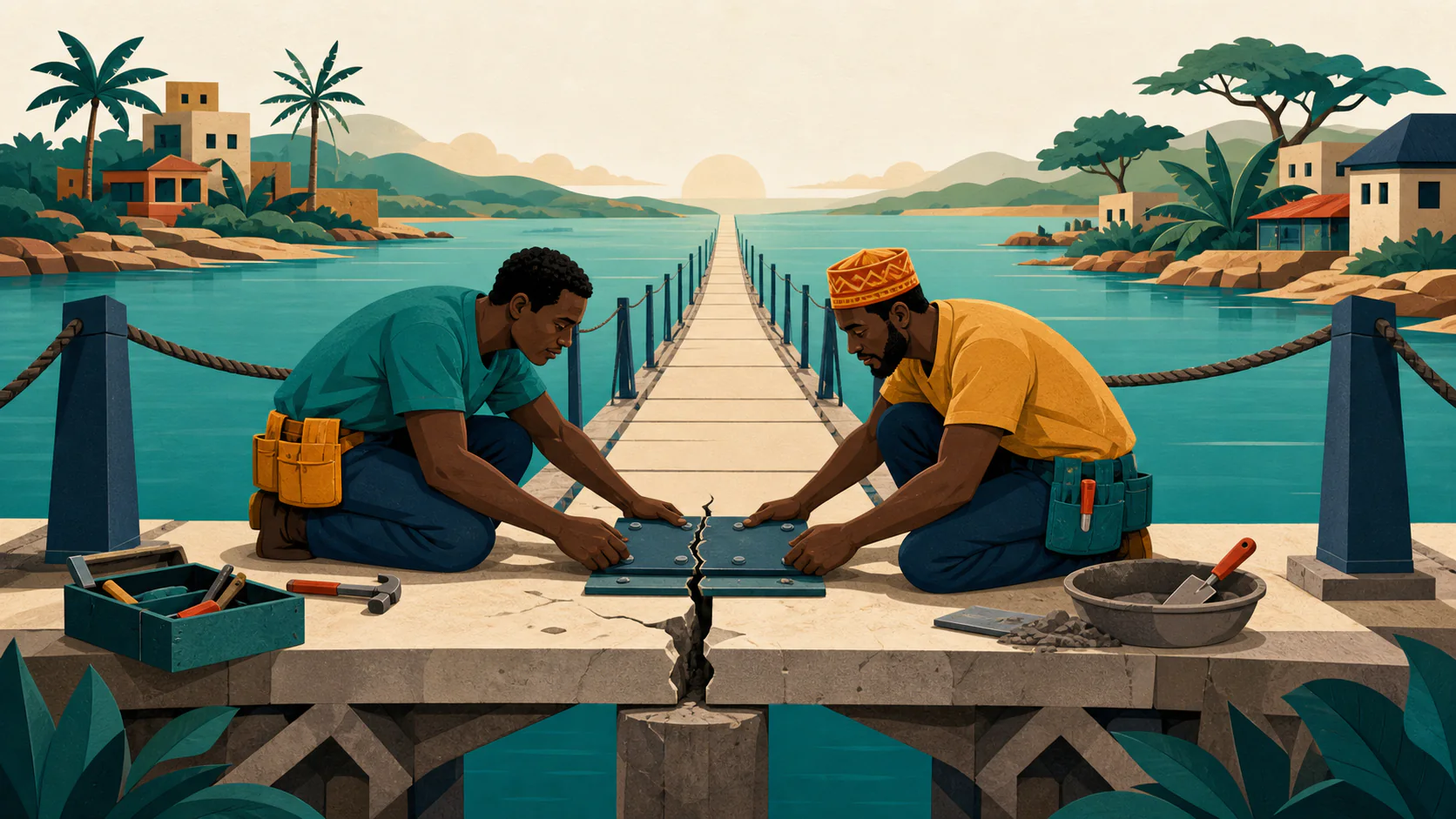
Paystack appears here as the visible result of a longer story. Before the product came sustained curiosity, problems revisited over time, and two people who learned to work together before sharing a company. Infrastructure also begins in the quality of the relationship.

That quality removes neither mistakes nor conflict. It makes examination possible. The conversation’s most durable thread may be this: building with others requires seeing the people behind their roles, then protecting a shared mission without erasing the differences that make it possible.